Seven Wall Art Styles to Change How Your Living Room Feels
Your living room does a lot of work. You unwind in it, you have people round, and you probably look at the same wall every evening. That wall is worth some thought, because the art on it sets the tone more than almost anything else you can change without a screwdriver.
Here are seven styles that work well in a living room, what each one brings, and a small tip for choosing.
1. Abstract
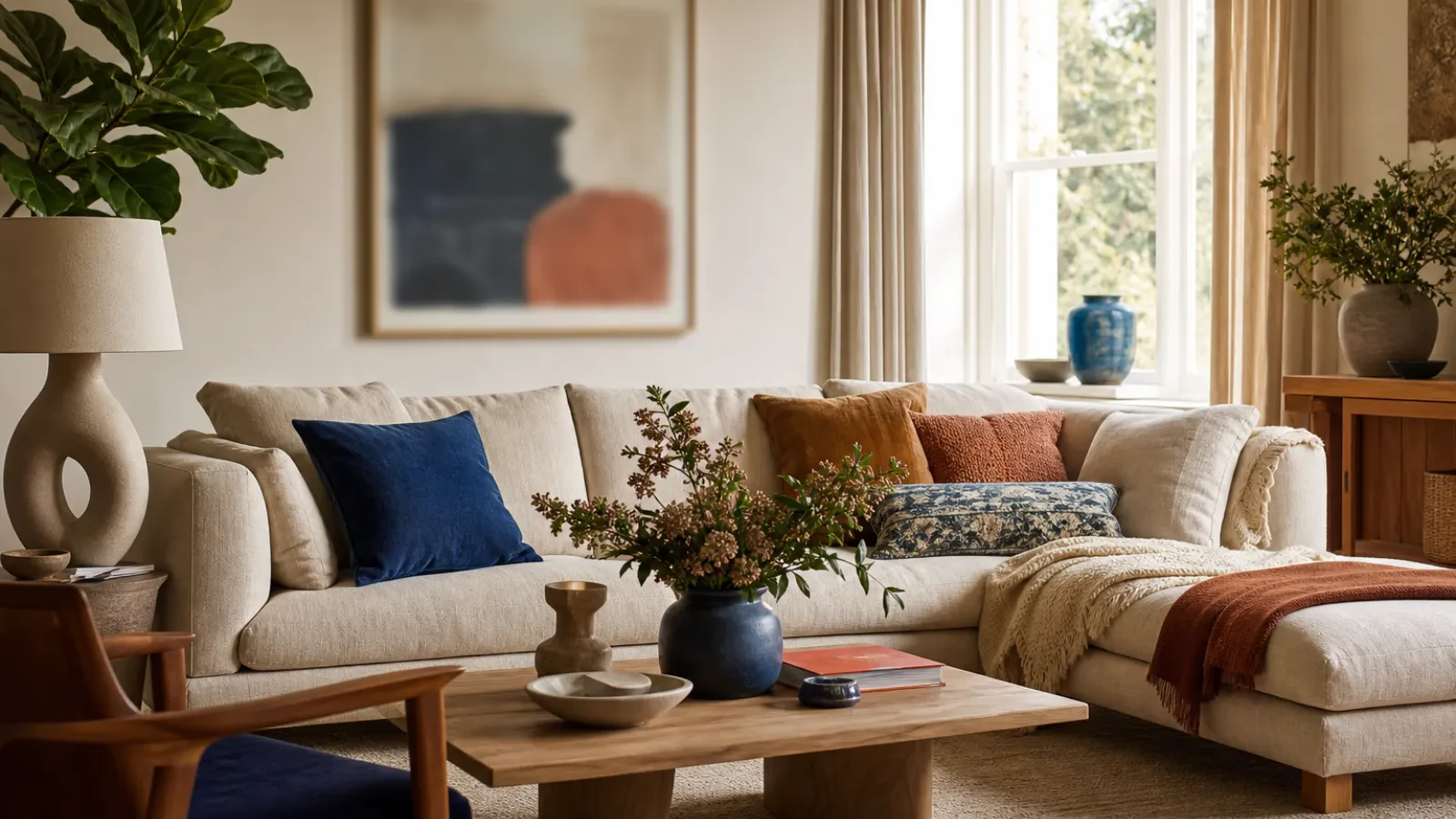
Abstract art doesn't tell you what to see, which is its great strength. Soft, drifting shapes make a room feel calm. Bold, high-contrast compositions give it energy. Because nothing in the picture is literal, it sits happily alongside whatever else you own, and it won't date as your furnishings change.
Try this: if your sofa and walls are neutral, pick an abstract piece with one or two strong colours and let it be the focal point.
2. Botanical and floral
Leaves, stems and blooms bring a living room a sense of growing things, even if every houseplant you've owned has sulked. Look for botanical and floral work that echoes the greens already in your room, or one that adds a colour you don't have yet.
Try this: let the size of the leaves guide you. Large, bold foliage suits a big wall. Delicate sprigs suit a corner or a gallery arrangement.
3. Landscapes and nature
A good landscape gives the eye somewhere to travel. A misty hillside, a quiet coastline or a wide sky can make a compact living room feel as if it goes on a little further than the walls allow. It's also an easy style to live with, because it's rarely demanding.
Try this: choose a landscape whose mood matches the time you use the room most. Soft morning light suits a space you start the day in. Deep evening colours suit a room for winding down.
4. Minimalist
Minimalist work is about restraint: a few lines, a lot of empty space, one quiet idea. It suits rooms where you want the furniture and light to do the talking, and it works well above a sideboard or beside a window.
Try this: give minimalist art room to breathe. A generous margin around the piece, or a simple frame, keeps it feeling deliberate rather than sparse.
5. Graphic and geometric
Clean shapes, strong lines and repeating patterns bring structure. In a living room full of soft furnishings, a geometric piece adds a crisp counterpoint. In a room that's already sharp and modern, it echoes the angles.
Try this: pick up one colour from a graphic or geometric print in a cushion or a throw, and the whole corner will feel pulled together.
6. Cities and architecture
Streets, skylines, staircases and facades suit a living room with a bit of attitude. They bring in movement and a sense of place, and they pair well with both industrial and traditional interiors.
Try this: a tall, narrow piece suits a chimney breast or a gap beside a bookcase. A wide one suits the wall above a sofa.
7. Surreal and dreamlike
If you'd like your living room to start conversations, a dreamlike scene does it quietly. Unexpected scale, odd horizons and strange calm give guests something to talk about, and give you something new to notice on the hundredth look.
Try this: keep the rest of the wall simple. A surreal piece needs space around it to do its work.
Choosing the format
The finish matters as much as the image. A framed print gives a classic, finished look, while stretched canvas feels softer and more relaxed. Acrylic panels have a clean, contemporary feel. Our formats page explains the differences, and the size guide helps you work out what will suit your wall.
Start with one
You don't need to decide on a whole style for the room. Start with the piece you keep coming back to, hang it, and live with it for a few weeks. Then you'll know what the wall wants next. If you'd like a second opinion, get in touch and we'll help you choose.