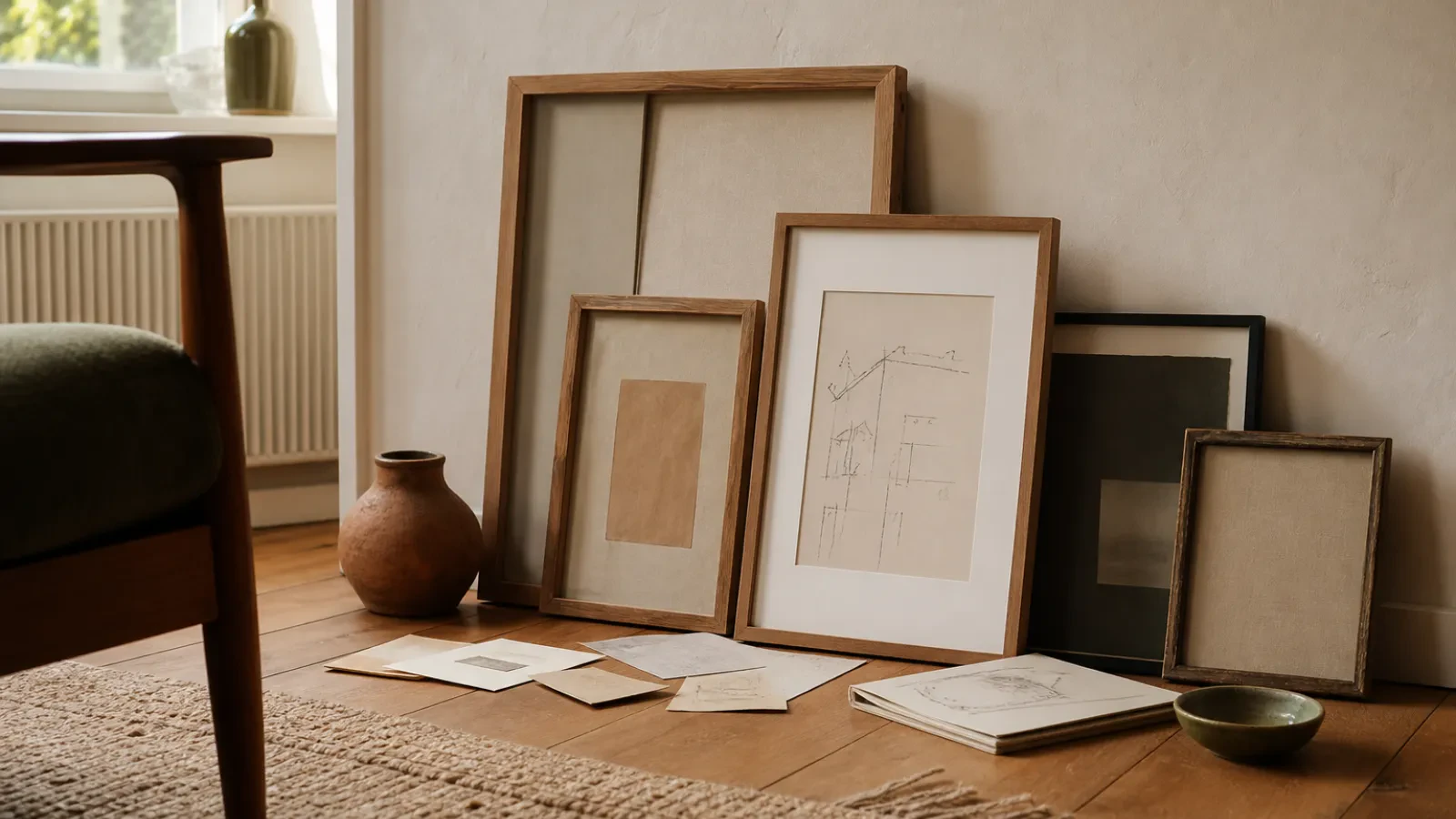
From Blank Walls to Personality Pieces: Curating a Home Gallery
A blank wall isn't a problem. It's a clean page. The trouble is that a clean page can feel intimidating, and a lot of people put off filling it for years.
A home gallery doesn't need to be expensive or perfect. It needs to feel like you. Here's a way to build one, one decision at a time.
1. Decide on the mood
Before you hang anything, ask what you want to feel when you walk past. Calm and cohesive? Lively and eclectic? Quietly dramatic? That one answer will guide your colours, your frames and the kind of pictures you look for.
If you're stuck, scroll through the gallery and note which pieces you linger on. A pattern usually appears quickly.
2. Pick an anchor
Start with one larger piece that you really love. This is your anchor, the thing the rest of the wall gathers around. It could be a landscape, an abstract, or a portrait. Hang it first, a little off-centre if the arrangement will grow around it.
Not sure about size? Our guide to choosing wall art size walks through it, and the size guide shows what's available.
3. Add supporting pieces
Now bring in medium and smaller pieces to keep the wall moving. A gallery wall has rhythm when sizes and shapes vary: a tall piece, a square, a wide one. If every piece is the same size, the arrangement can look stiff.
Pieces that share something work best together. It might be a colour, a subject or a mood. A cluster of botanical prints in different sizes, say, will feel natural, and you could add one abstract that picks up the same colours.
4. Mix formats
You don't have to stick to one format. A framed print has a crisp, finished edge. Stretched canvas feels softer and has no frame to compete with the picture. An acrylic panel adds a clean, contemporary note. Mixing two or three formats adds depth, as long as the colours still talk to each other. Our formats page shows the options.
5. Add something personal
The best gallery walls have a story in them. That might be a framed page from a favourite book, a child's drawing, a postcard from a trip or a ticket stub. Place a personal piece among the art you've chosen and the wall stops being decoration and starts being yours.
6. Choose frames and spacing with intent
Frames work like punctuation. Matching frames feel polished and modern. Mixed frames feel relaxed and collected. Either is fine, but choose on purpose.
Spacing matters just as much. A gap of around five to eight centimetres between pieces suits most walls. Tight spacing feels cosy and dense, while wider gaps feel airy.
7. Lay it out first
Before you make a single hole, put it all together on the floor. Or cut paper templates to size and tape them to the wall. Move things around until the balance feels right. Take a quick photo of the layout so you can remember it when you start hanging.
8. Let it grow
A gallery is never really finished. Leave a little room for the piece you haven't found yet. Add as you go, swap a print now and then, and let the wall change as you do.
A good place to begin
Pick one piece you love and hang it. Everything else can follow, in its own time. If you'd like a hand with the first step, get in touch and we'll help you choose.